2009-04-28

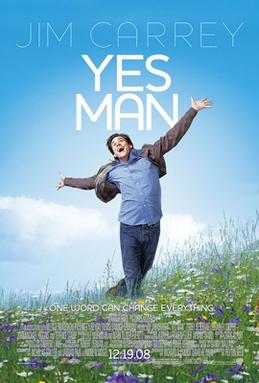
Yes Man

Directed by Peyton Reed
Based on a book by Danny Wallace
Screenplay by Nicholas Stoller, Jarrad Paul, and Andrew Mogel
Starring: Jim Carrey, Zooey Deschanel, Bradley Cooper, John Michael Higgins, Rhys Darby, Terence Stamp.
Release year: 2008
IMDB rating: 7.1

The latest comedy from Jim Carrey tells about Carl Allen whose life had been pretty much boring and lonely. Spending most of his time alone and tend to see life in a negative tone. This all changed when he met his friend Nick who invited him to attend a motivational seminar given by Terrence Bundley. After making a promise to Terrence to say yes to every request, he began saying yes to everyone’s request, thinking that breaking the promise will bring him bad luck. Subsequently, Carl met Allison and so a romantic element is introduced in this movie. Carl continued to say yes to everything until in the end he realized that people should say yes only when they want to say it.

It’s been quite some time since I saw a Jim Carrey movie. Yes Man puts Jim Carrey back on his usual acting style. Still, compared to Ace Ventura and Mask, the comical expressions were somewhat very few. The film has a serious message to deliver, but successfully executed in a fun way. From start to finish, despite the misfortunes that struck Carl, the fun remains.

Acting has been fully centered on Carl Allen, leaving hardly any room to expand other characters. Peter and Norman could have received better character depths, but that didn’t happen. As for Jim’s performance, it could be said that he was still good in doing his usual style of comedy, but I still prefer his previous films like Liar Liar. Zooey was also good, although as the lead actress she was also overshadowed by Jim’s part.

Nevertheless, this is a fun movie to watch. The story is good enough, although its end is not hard to predict. The acting is probably mostly credited to Jim Carrey instead the rest of the cast, and the directing is pretty much standard for a romantic comedy. Wrapping things up, I’d give it a 7.0.
 
2009-04-11

Atsu-hime

Based on the novel Tenshoin Atsuhime by Miyao Tomiko
Screenplay by Tabuchi Kumiko
Directed by Sato Mineyo, Okada Ken, Horikirizono Kentaro, Watanabe Yoshio, Uesugi Tadashi, & Matsukawa Hirotaka
Music by Yoshimata Ryo
Narrated by Naraoka Tomoko


Atsu-hime is the 47th taiga drama depicting the life of Princess Atsu from her birth in until her death. The story is somewhat divided into two phases. The first is involving the childhood of Okatsu, which is filled with family theme. This theme gradually replaced with political theme as Okatsu marries Tokugawa Iesada, although some family-related theme remains. Her marriage was set by Shimazu Nariakira who adopted her in order to push for the reform in the government. Atsu-hime’s task is to persuade her husband, Tokugawa Iesada, to name Hitotsubashi Yoshinobu as successor.


As Atsu-hime moves to Edo, the story is mainly about her efforts to adapt into the Ooku’s everyday life, while political theme gradually rising. Although under pressure by her chief attendant Kikushima who repeatedly reminds her of true mission, Atsu-hime decides to meet with both Yoshinobu and Iemochi. She finally let Iesada to choose the heir, defying Nariakira’s wish. At this point, the shogunate’s power gradually weakens. After the death of Iesada, Atsu-hime takes the tonsure and takes the name of Tenshoin. Hereafter the story shifts towards the prelude to the fall of Tokugawa shogunate.


Tenshoin assumes the leadership at the Ooku after Iesada’s death. Her relationship with Iemochi is close as she often gives the young shogun her thoughts regarding the politics. Still, at the moment the Chief Minister Ii Naosuke wields the power strong enough to mostly control the shogunate, undermining Iemochi’s authority. Yet, the shogunate’s power rapidly declined after Naosuke was assassinated. With no strong political figure in the government, Iemochi faces difficulty in dealing with the Satsuma clan’s intention to reform the government, as well as dealing with the Imperial forces who want to win the power back from the shogunate and return it to the Emperor.


Tokugawa Iemochi then marries Princess Kazunomiya Chikako, who comes from the Imperial family, thus creating a union between the shogunate and the imperial families. At this moment Lady Tenshoin met with Katsu Rintaro, who turns out to be an able politician. Soon after the untimely death of Iemochi, Tokugawa Yoshinobu takes over the lead. Despite he is a stronger leader than Iemochi, he could not win against the Satsuma clan which is led by Nariakira’s brother Shimazu Tadayuki who was appointed as successor after Nariakira’s death. Along with Komatsu Tatewaki, Saigo Kichinosuke and Okubo Shosuke, the Satsuma clan join forces with the Choshu clan, thanks to the mediation by Sakamoto Ryoma, a student of Katsu Rintaro. In the end, the reformation succeeds and Japan enters the Meiji era. Several years later, Lady Tenshoin passed away at the age of 49.


Miyazaki Aoi broke the record of being the youngest artist to take the lead in the taiga drama series at the age of 22 years and 1 month. This record was previously held by Takizawa Hideaki who portrayed Minamoto Kuro Yoshitsune in the 2005 taiga drama series “Yoshitsune”. As shown in the early part of the series, the cheerful Katsu must overcome a lot of hardship as Atsu-hime, even until after she becomes Lady Tenshoin. For portraying this part, Aoi managed to play the role perfectly. Unfortunately, the leading actor seems to be unable to match her performance and the rest of the cast’s performance. Eita, who played as Komatsu Tatewaki, was probably the weakest link in the series. Maybe not bad, but somewhat he was below the others’ performances.


The series has a remarkable cast, doing remarkable job. I cannot put all of the names here, because the list is too long to put on. Still, my favorite is Takahashi Hideki who played Shimazu Nariakira. The actor sparked charisma and able to command respect from the audience. And this was not his only remarkable role. In Yoshitsune, he played Fujiwara Hidehira and in Hojo Tokimune he played as Mori Suemitsu. Another strong performer is Ozawa Yukiyoshi, the man behind Saigo Kichinosuke. He and the others from the Satsuma cast used the local accent throughout the series. This contrasts with his previous role as Kiso Yoshinaka in “Yoshitsune”. His portrayal of the iron-willed man who in the end only yield to his late master, Shimazu Nariakira, was brilliant. The actors who played the last three shoguns were also great. As Tokugawa Iesada, Sakai Masato must play as a man who pretended to be an idiot as a mean to protect himself from assassination. Matsuda Shota portrayed the elegant and soft spoken Tokugawa Iemochi, while Hira Takehiro successfully played the harsh and bold Tokugawa Yoshinobu who, in the end fell into despair after the Emperor branded him as traitor. Some other noticeable characters are Nakamura Baijaku (as Ii Naosuke), Kitaoji Kinya (as Katsu Rintaro), Harada Taizo (as Okubo Shosuke), Hira Mikijiro (as Zusho Hirosato) and Nagatsuka Kyozo (as Shimazu Tadatake). The actresses other than Miyazaki Aoi also delivered impressive performances, starting with Matsuzaka Keiko (Ikushima) and Inamori Izumi (Takiyama). Despite perhaps a popular actress, Horikita Maki who played as Princess Kazunomiya was somewhat less impressive.


Music is definitely where this series also excelled. The soundtrack made the acting more convincing and the story more emotional. Even when listened separately, the soundtrack is top notch. As far as I’ve experienced, Atsu-hime soundtrack is the best taiga soundtrack that I’ve ever heard, toppling the OST from Toshiie and Matsu from the top of my list.

Blessed with great story (although dragging its feet at first) and excellent soundtrack, as well as strong performance from most of the cast, Atsu-hime is truly a series worth watching. Given the content and the fact that the leading role is a heroine, this would be easily preferred by female audience rather than male ones. Still, I enjoyed every bit of it. For the score, I’d give it a 9.5.

2009-04-07

The Spirit


Directed by Frank Miller
Written by Will Eisner
Screenplay by Frank Miller
Starring: Gabriel Macht, Samuel L. Jackson, Eva Mendes, Scarlett Johansson, Sarah Paulson, Jamie King, Dan Lauria, Paz Vega, and Louis Lombardi
Release year: 2008
IMDB rating: 5.1

Mesmerizing visuals are probably the only strength of this movie about a deceased cop who returned from the dead and became a crime fighter known as The Spirit. Looking after the Central City, he works with the police department headed by Commissioner Dolan. His arch-enemy is The Octopus who claimed that he created The Spirit and this time, on the hunt of the Blood of Heracles which could make him an immortal. On the other side comes Sand Saref, a femme fatale who was a childhood sweetheart of Denny Colt, aka The Spirit. After she mistakenly took the chest containing the Blood of Heracles wanted by The Octopus, and that The Octopus mistakenly obtained the treasure of the Argonauts sought by her, the parties will have to confront each other in the final confrontation.


The style of the movie is similar to Sin City, another comic book adaptation, also directed by Frank Miller (and Robert Rodriguez). Frame by frame comic strip translations to the movie screen made both movies great to behold. 300 was also using similar approach, but regarding similarities, I’d say Sin City and The Spirit are much more look alike. Despite some violent scenes, compared to what I just watched in Punisher: War Zone, the ones in The Spirit could be classified as mild. The atmosphere is dark, just like Sin City, with red being used as the main contrasting color.

Alas, the great visuals is not accompanied with great acting. There’s some sense of lack of depth in the cast’s performances. Watching the movie was like flipping through comic pages, there’s a lack of emotion expressed from the characters although there are a few funny scenes involved. The only noticeable play was from Samuel L. Jackson who played The Octopus. Other characters seemed to be overshadowed by Jackson’s Octopus.

As for the plot, well it’s a comic book adaptation, so if Frank Miller wanted to do it as exactly drawn and told in the comic pages, then we cannot complain about the story. Yet, some improvisations could really help put more quality to this film.


The final score is 6.0. I’ve seen Sin City before, so another look alike would have to offer something more, such as better plot or better acting, or both. The visuals were great, but without great performance from the cast, it’s like beautifully wrapped box with nothing inside.

Punisher: War Zone

Directed by Lexi Alexander
Written by Nick Santora, Lexi Alexander, Matt Holloway, Arthur Marcum
Starring: Ray Stevenson, Dominic West, Julie Benz, Wayne Knight, Stephanie Janusauskas, Dash Mihok, Colin Salmon, Doug Hutchison
Release year: 2008
IMDB rating: 6.3


Frank Castle is back, and this time he must deal with Billy Russoti who later transformed into Jigsaw. Along with his brother Loony Bin Jim and his two henchmen Ink and Pittsy, Jigsaw seeks revenge on Punisher for disfiguring his face. Later on, Jigsaw and Loony Bin Jim recruited gangsters from all over the city to fight the Punisher while also taking hostage of Microchip and Angela Donatelli and her daughter – the wife and daughter of an FBI agent mista
kenly killed by Frank Castle during the attack on the mob boss Gaitano Cesare’s mansion.

Except from the despair shown at the cemetary, not much emotion is shown at the face of Frank Castle, which is played by Ray Stevenson. Throughout most of the movie, only cold stare could be seen from his eyes, ma
king him a lot tougher Punisher than Thomas Jane. Unfortunately, as the plot demands lots of action scenes, dialogues are limited. Unfortunately, so did the quality of the acting. A starking example is when Angela Donatelli met Frank Castle in her home. I just couldn’t see real anger in Julie Benz’s expression nor tone of voice. As for the performances from the villains, well, I guess they’re pretty much standard. Seen better ones in the Dark Knight.

The plot of Punisher: War Zone is very, very simple. So simple that if the action sequences were zipped, maybe there’s only 45 minutes left in the film. The only thing bugging me with the story is why after rampaging for years Frank Castle would feel remorse after mistakenly killed an undercover FBI agent. I doubt that the real Punisher would feel that low. At least, watch the massacre at the beginning of the movie and you will know what I mean.

While the pictures were quite nice, there’s a big question regarding the movie: do all those violence necessary? I mean, I don’t even consider them violence anymore, but rather sheer brutality. Blown heads, chopped neck, someone blow to bits by a grenade launcher, and other graphically violent scenes. These scenes dominated the movie, mostly at the beginning and near the end of the movie. Of course, action-packed movie lovers would be feeling ecstatic, but I believe it went too far with it.

If only the violent scenes were toned down a bit, and more dialogues and quality performance from the cast were there, this could have been a lot more enjoyable movie. For sure, this flick is not for kids. The blood and gore are too much to handle for kids. My final rating is 4.0. There are just two positive things in the movie: the casting of Ray Stevenson and most of the pictures are great. But then again, no story, no glory.
2009-03-05

The Day The Earth Stood Still

Directed by Scott Derrickson
Screenplay by David Scarpa
Story by Harry Bates
Starring: Keanu Reeves, Jennifer Connelly, Jaden Smith, John Cleese, Kathy Bates
Release Year: 2008
IMDB rating: 5.6

The remake of a 1951 movie of the same title, The Day The Earth Stood Still is a sci-fi flick with great premise, but failed to be impressive, least memorable.


Essentially, in a zip, the aliens got fed up with earthlings tendencies to abuse the mother earth, and decided to do some cleansing on planet earth. Klaatu was sent as their messenger. Suddenly, this reminds me to the starting point of the Hitchhiker’s Guide To The Galaxy’s story, where earth was demolished to make way for intergalactic transportation route. Klaatu then met Helen Benson, a scientist that got scooped up by the US government to investigate the alien sphere that was coming to earth. From his interactions with Helen, Klaatu went to ponder whether cleaning up earth from humans would be a good idea to do or not. Especially when Helen pleaded by saying that: “We can change.”


While the premise was great, the execution failed to impress me. The alien that landed on Manhattan? Oh it was so not menacing, because it was kind enough to use high-pitch sound to the humans, and the fact was the humans started the fight. Then, Klaatu’s intention to speak at the UN? That’s new to me, because usually in the movies, aliens attack first, and get their chances to talk later. Then there
’s the plea: “We can change.”. Yeah, for how long? Ever since the mankind populated this earth, I guess nothing ever changes. Fightings between humans will always exist. Only the abuse of planet earth, I guess, has the chance of stopping. Of course I don’t know exactly when. Then when the swarm of metallic insects ravaged the earth, well I think they should have picked the humans instead of cars or street signs or even a stadium. Finally, the most awkward thing that I noticed was the morning after the alien spheres landed. The news reported than all the stock markets were down big time. Recall that the event took place sometime in the evening in the US, so the US stock market would have been closed already, and if anything happened to the stock market, it would only happen to Asian markets. Europe would not open their markets on such big event.

The acting, however, was not great. Keanu Reeves only do very little lines there. Jennifer Connelly and Jaden Smith were the ones with the responsibility to impress the audience. Still, I could not find anything impressive from them. In fact, Jaden Smith might have been overdoing it. Kathy Bates and John Cleese only delivered standard performances in their supporting roles.

The only good point about the movie was probably its special effects, but that too, was pretty much standard because lots of other films got better special effects. So, in the end, despite its glorious success at the box office, The Day The Earth Stood Still was only a sci-fi movie with lack of impressive stuffs in it. I probably have to look for the original version. It is said that the original was way better.


For the final score, I give it a 5.0.

Gran Torino


Directed by Clint Eastwood
Written by Nick Schenk
Story by Dave Johannson & Nick Schenk
Starring: Clint Eastwood, Bee Vang, Ahney Her, Christopher Carley, Brian Haley, Brian Howe
Release Year: 2008
IMDB rating: 8.4

Clint Eastwood is back! This time as an elderly war veteran whose wife just died. Living alone in a neighborhood with most of them are Hmong people, Walt Kowalski is also having an inconvenient relationship with his two sons. As a war veteran, he still could not shake away his memories during his service in Korea. When his Hmong neighbor, Thao, tried to steal his Gran Torino, the relationship between the two started. Initially feeling uncomfortable with his neighbors, Walt began to find a new ‘family’. When a problem with Hmong teenage gangsters came up, Walt would be caught in between the gangsters and his newly found family.

Walt Kowalski may not be as tough as Dirty Harry, but at least he had the same menacing impression, while Thao and his sister Sue were well played by Bee Vang & Ahney Her, respectively. The acting in the movie is centered in these three people. Walt’s family members were given smaller roles as well as Father Janovich. Dialogues were good. Despite his menacing look, Walt was rather a funny person in his own way, if you observe his dialogues and monologues. Various impressions from anger, guilt, fear, and happiness were there in Walt Kowalski’s character, and Clint Eastwood definitely played this character well.

Although the ending was rather a surprise for me, I considered it as a very good ending. I’m not going to spoil it here, but I’d say it was a great one. The pace of the story was also good, building up the suspense up to the end of the movie. If asked what’s the point of the whole story anyway, well I’d say that that was actually mentioned sometime during the movie when Father Janovich talked to Walt about life and death. Walt felt that he knew a lot about death from his service in Korea, while he was unable to answer what he knew about life. This movie was about Walt finally found the answer to the latter question.

Even with just three core characters, the movie was very enjoyable, and both acting and the plot were very good. I’d give it an 8.0, at par with Changeling.

2009-02-17

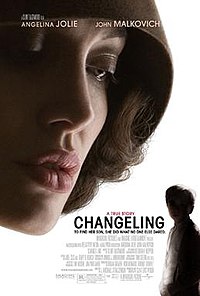
Changeling


Directed by Clint Eastwood
Written by J. Michael Straczynski
Starring: Angelina Jolie, Jason Butler Harner, Jeffrey Donovan, John Malkovich, Michael Kelly, Amy Ryan, Geoff Pierson, Gattlin Griffith, Colm Feore, Denis O’Hare, Devon Conti
Release Year: 2008
IMDB rating: 8.1

Another film based on a true story about Wineville Chicken Coop Murders committed in California in 1928 but, unlike Longford, the audience was dragged to sympathize with the victims. In this case, I wonder if Lord Longford would want to campaign for a release of Gordon Northcott the way he campaigned for Myra Hindley.

The victims of the murders were young boys. Although Gordon Northcott was convicted for 3 murders, it was believed that the number of the victims could have reached as many as 20. During the murders, he was ‘assisted’ by his nephew, Sandford Clark.

The film began with the disappearance of Walter Collins, the son of Christine Collins on March 10th 1928. Unsuccessful to find the missing boy, the Los Angeles Police Department were under heavy pressure from the public. In the movie, the public were represented by Reverend Gustav Briegleb who already critizing the LAPD for its incompetence, corruption, and excessive violence outside the justice system. Several months passed and one day the police informed Christine that Walter had been found. However, upon meeting the boy, she believed that the boy was not Walter but was told to just take him home. After a while, she found out physical differences between Walter and the boy: that Walter was taller and not circumcised. When she brought the matter to the police, the LAPD insisted, through Captain J.J. Jones that the boy was indeed Walter. Eventually, her persistence made Captain Jones to put her into a mental institution. This implied that the LAPD could not afford the public humiliation of being mistaken. Meanwhile, Detective Ybarra was assigned to deport a boy who happened to be Sandford Clark. It was from Clark that the Collins’ case eventually solved.


In a matter of acting performances, I believe that Angelina Jolie, Jason Butler Harner and Jeffrey Donovan deserved the applause, as well as Geoff Pierson who portrayed Sammy Hahn, the defense attorney who represented Christine Collins. While Jolie managed to play the character of a woman who was deemed ‘second class’ during that period, struggling to fight for finding the truth regarding her son, Harner gave me the impression of a serial killer with no sense of guilt. Shown relaxed and somewhat mentally disturbed, he finally trembled in fear when facing death itself. Jeffrey Donovan also successful in delivering the image of the authority that would do anything to avoid public humiliation. Scenes during the trial when Sammy Hahn questioned Captain Jones were very good, although it was rather short. John Malkovich could have been impressive if only his character performed more dialogues, but given that his role was rather small, his fine performance was overshadowed by the ones I’ve mentioned earlier.

I think the story was well told, and that the suspense factor was kept going throughout the film. Focusing on not just the murder, but the themes of that era such as violence by the police and the suppression of women. For those unaware of the conditions of that period, especially regarding the latter, it should come to mind halfway through the film when Christine was admitted to the mental institution. Despite the plot put the image of the authorities on the negative side, it was after all, managed to balance it through Detective Ybarra and that in the end, the system worked. From Eastwood himself, he said that Gordon Northcott was an ideal candidate for a capital punishment of crimes against children although public display of the execution should be considered as barbaric (as seen near the end of the movie).

Overall, watching the movie was a great experience to me. Especially after finished watching Longford which had the same theme, but of different perspective. While Longford promotes forgiveness, Changeling condemns the crime. Looking at Gordon Northcott’s case, one would most likely refuse to provide forgiveness to the man. Yet, there is one significant difference here: Northcott only served 2 years in prison before he was hanged to death, while Myra Hindley served more than 30 years before she died. One question arises: had Gordon be sentenced to life imprisonment, would he able to redeem his crimes? Unfortunately, no one would be able to answer that. This movie also acts as a reminder on how things were when women were treated as second-class citizens. Even now, in some countries, this still happens.

As for the final score for the movie, I give it an 8.0.